Mastering moisture barriers in ice cream cone: How accelerated cryogenic fat glaze crystallization drives ROI through extended shelf life
The high-stakes physics of the sugar cone moisture barrier
In industrial cone ice cream manufacturing, the cornetto-style cone represents one of the most technically demanding product formats to produce and maintain at scale. The core consumer appeal of a premium filled cone relies on a sensory contrast: the smooth, creamy texture of aerated dairy ice cream against the structural crunch of a freshly baked, low-moisture cone (can be both sugar or wafer/biscuit). However, maintaining this contrast throughout distribution presents a significant physics and chemical challenge. Ice cream contains a substantial proportion of water, whereas cones are highly hygroscopic baked matrices. Without an moisture-resistant physical barrier separating the two materials, water molecules naturally migrate from the ice cream into the waffle wall, quickly rendering the crisp cone soft and soggy.
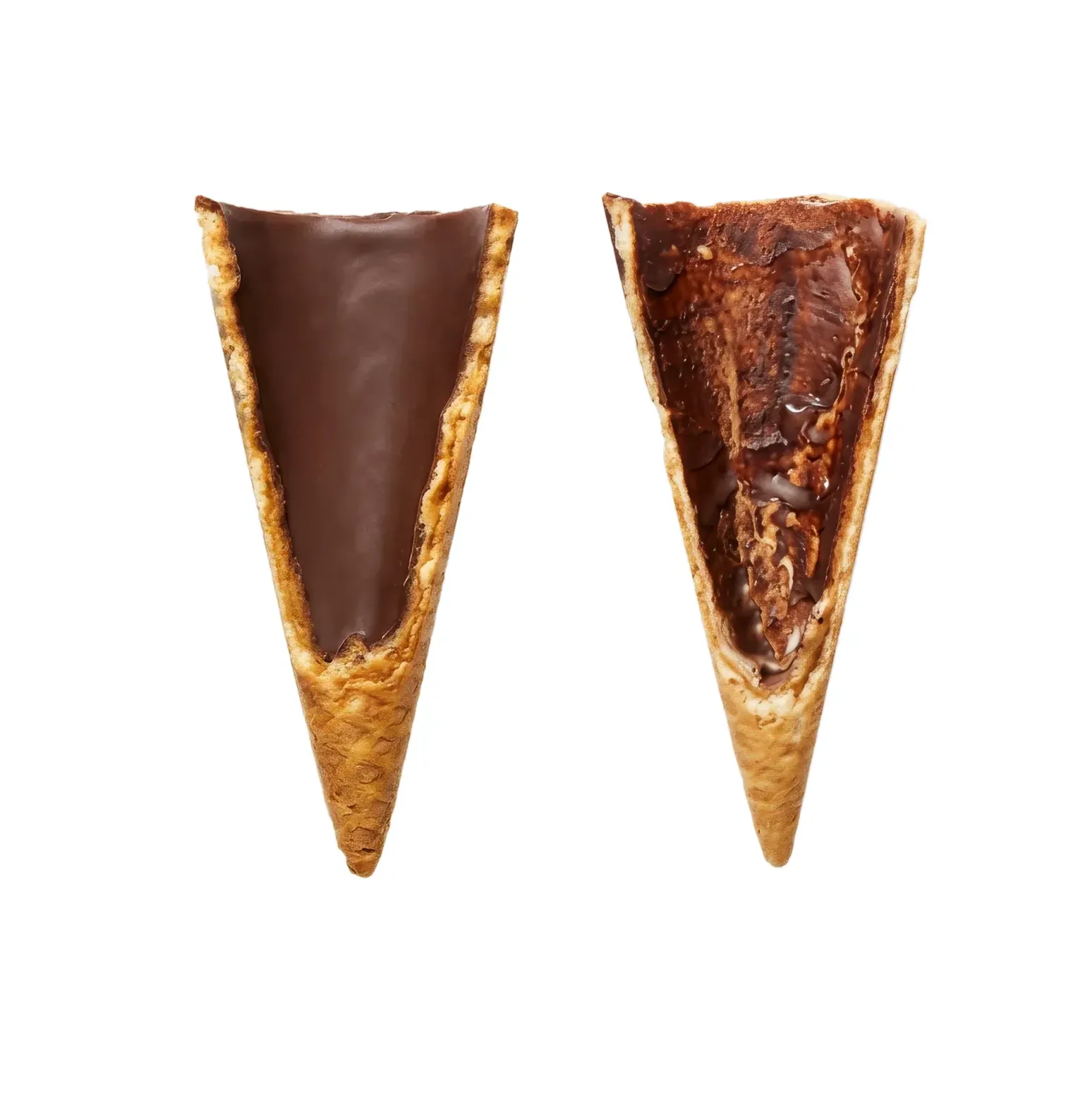
To block this moisture transfer, industrial ice cream manufacturers apply a protective coating of chocolate-flavored fat glaze inside the cone before dosing the ice cream mix. Formulated primarily with vegetable fats or cocoa butter, this fat glaze is sprayed at approximately 40°C to achieve complete internal coverage. However, liquid fat requires phase transition and lipid crystallization to form a stable, continuous solid-fat network that provides an effective moisture-resistant barrier . Under conventional production line setups, the time elapsed between glaze spraying and ice cream dosing is insufficient for complete fat crystallization. When ice cream is dosed onto a partially crystallized glaze layer, the mechanical force of the ice cream stream scrapes away sections of the coating. This creates microscopic pinholes, thin spots, and bare patches in the protective layer, destroying the integrity of the moisture barrier long before the product reaches the end consumer.
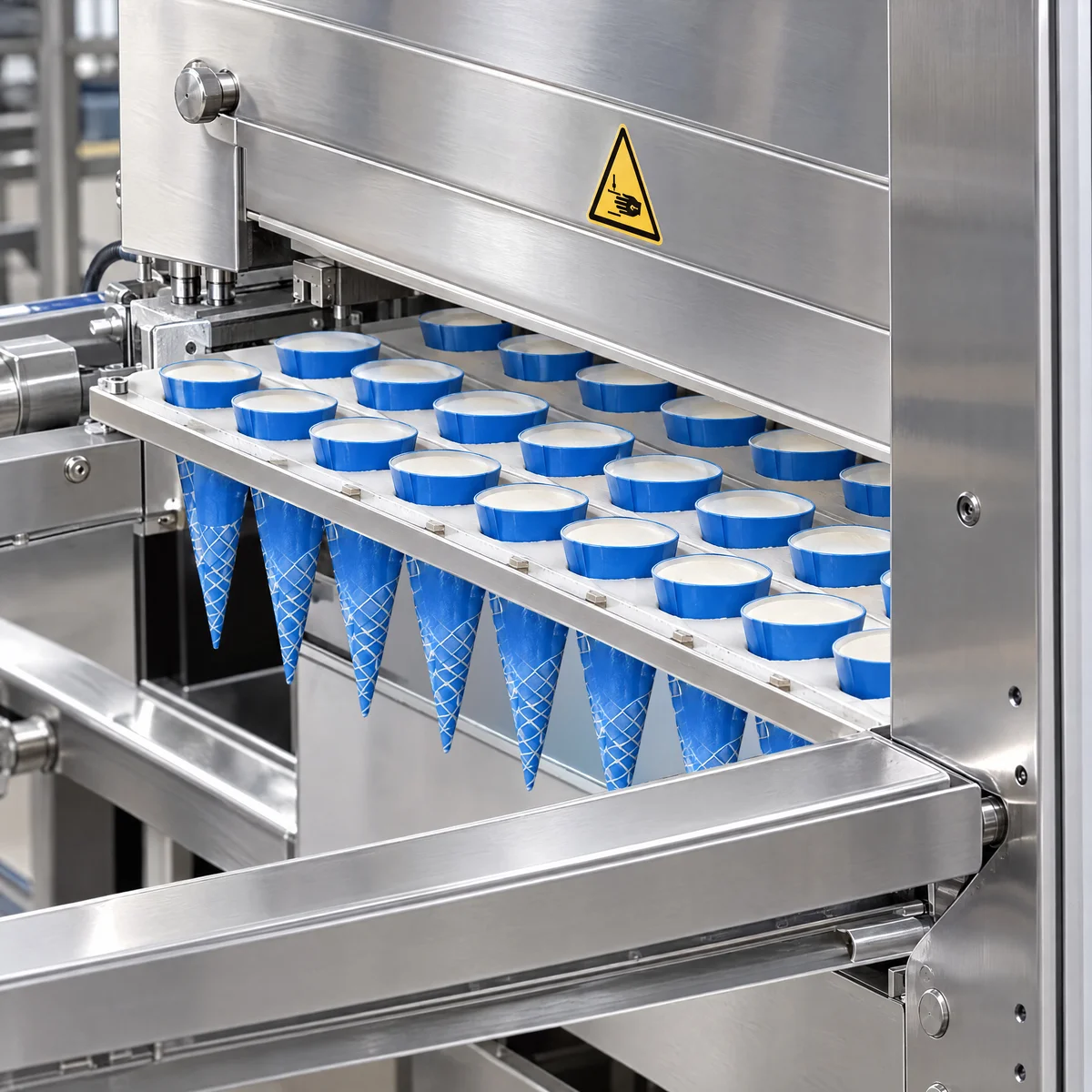
The cryogenic solution: accelerated fat glaze crystallization
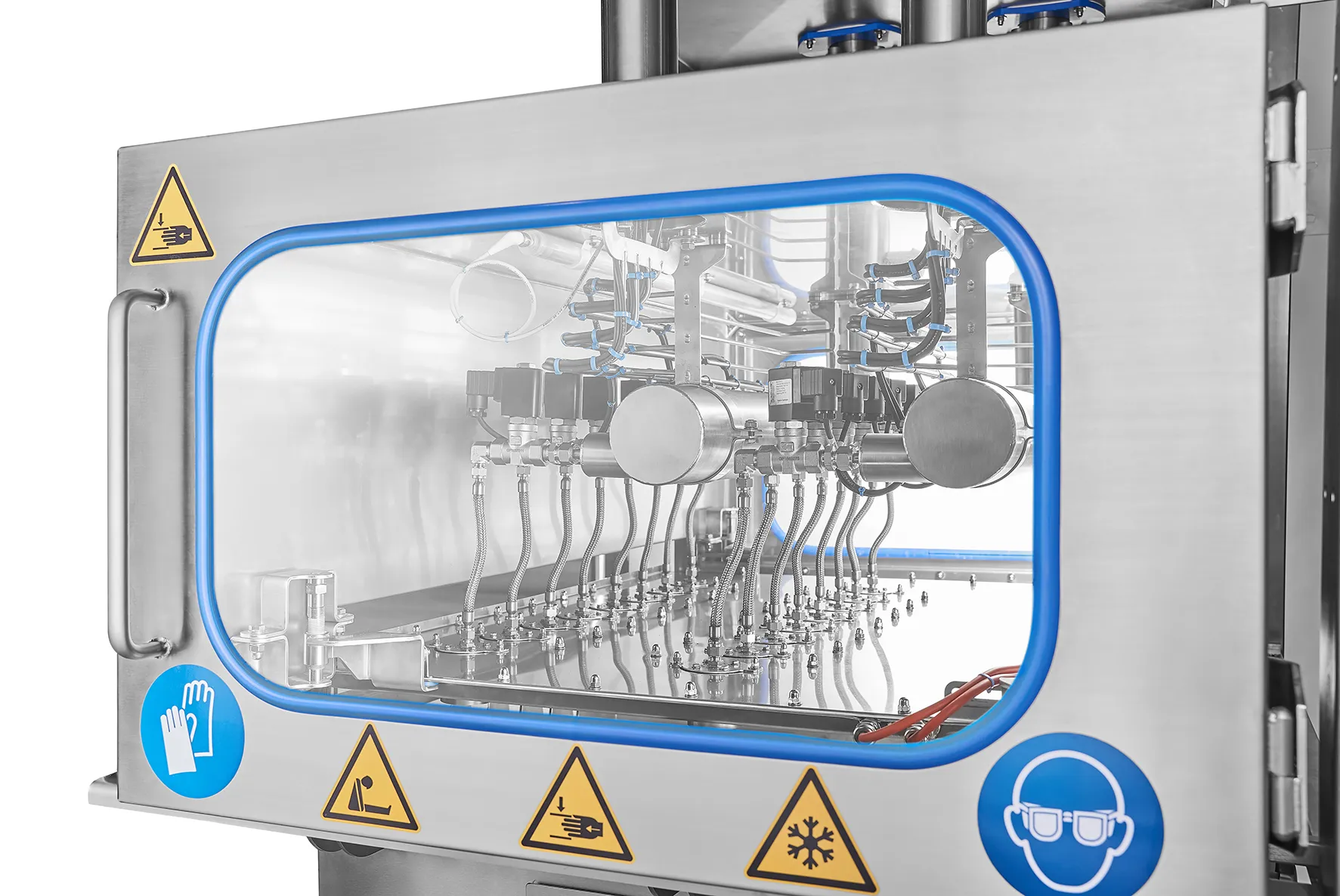
To eliminate moisture barrier failure at its root cause, Dohmeyer engineered the Fat Glaze Crystallization Unit - a specialized cryogenic solution designed for seamless in-line integration withhigh-speed ice cream filling lines. by dosing liquid nitrogen mixture, the unit removes the excess heat of the fat glaze and brings it rapidly to the crystallisation temperature. This process rapidly removes the excess heat and leaves the appropriate time fot the compound to crystallize till it reaches the ice cream dosing station.
Warm Glaze Spray (~40°C)
▼
Liquid nitrogen mixture ► accelerated Crystallization
▼
Ice Cream Dosing ► Zero Scraping / Intact Moisture Barrier
By achieving accelerating the crystallization process, the fat glaze moves into its solid state, and creates a uniform, and smooth protective shield before the ice cream mix ever touches it. When the ice cream is dosed into the cone, it glides across a fully hardened fat glaze surface without scraping or disrupting the film. The resulting barrier remains continuous and structurally sound across the entire inner geometry of the cone, effectively sealing the hygroscopic wafer and protects it against moisture penetration.
This extension in shelf life transforms thefinancial metrics of industrial ice cream operations in four critical areas:
1. Elimination of Unsellable Inventory and Write-Offs: In traditional supply chains, finished goods approaching their 6-month expiration window must often be discounted heavily, destroyed, or written off as scrap. By more than doubling the product's viable lifespan, Dohmeyer drastically reduces warehouse spoilage and inventory write-offs.
2. Drastic Reduction in Retail Returns and Credit Notes: Soft or soggy cones at the retail level result in retailer chargebacks, brand complaints, and expensive credit notes. Ensuring that every cone maintains its original oven-baked crunch for more than a year protects retail relationships and eliminates quality-based product recalls.
3. Buffer Against Cold Chain Fluctuation: During transit and retail storage, temperature micro-fluctuations accelerate moisture diffusion across compromised barriers. A fully crystallized, continuous fat glaze provides robust resistance against moisture transfer even during unavoidable cold chain stress - up to the point that the barrier remains solid.
4. Enhanced Brand Equity and Customer Retention: The cone ice cream category is highly competitive. Consistently delivering a crisp, premium eating experience builds consumer trust and solidifies market leadership.
Additionally important factor - especially in Europe and USA - can be cost related to disposal of food products and CSR.
EFSA - Reducing consumer food waste
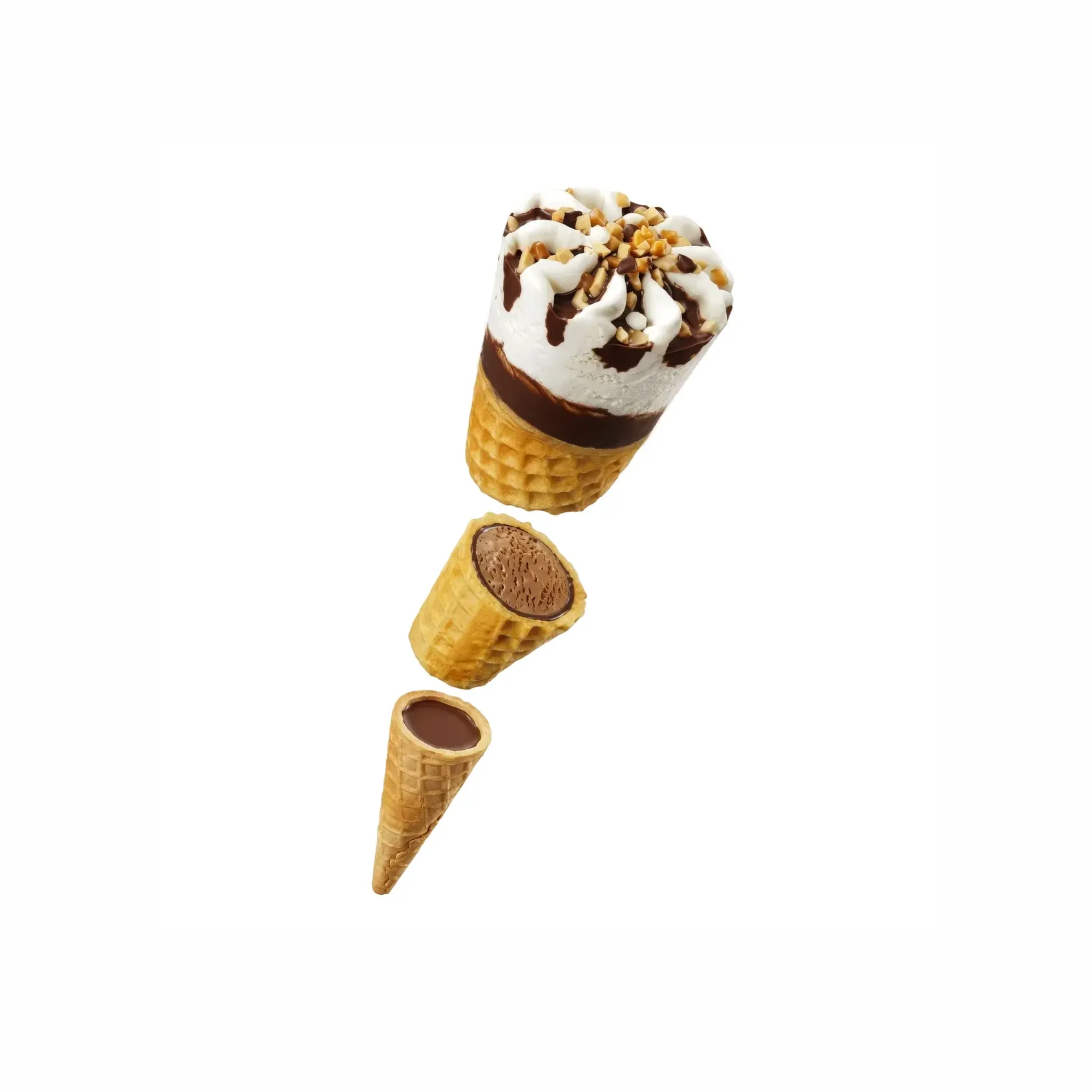

Transforming the supply chain: strategic operational savings & global export
Beyond direct inventory preservation, extending shelf life to more than a year unlocks profound strategic advantages across supply chain management, factory capacity planning, and international market expansion.
Year-round production smoothing and labor optimization
Ice cream sales are notoriously seasonal, peaking sharply during spring and summer. Traditionally, ice cream manufacturers are forced to compress their production schedules into tight, high-stress windows because a 6-month shelf life prevents them from building up significant inventory during autumn and winter. This results in severe operational inefficiencies:
· Heavy overtime labor expenses and temporary staffing spikes during peak season.
· Under-utilized production lines and idle plant capacity during off-peak months.
· HighCAPEX requirements for additional high-speed filling lines needed solely to meet short peak demand spikes.
· Limited maintenance time per year
With an 18+ month shelf life, manufacturers can transition to a smoothed, year-round production model. Factories can operate at stable, optimized output levels during autumn and winter, stockpiling finished goods in cold storage without the risk of products expiring before the summer sales peak. This levels out labor costs, maximizes equipment utilization, and defers expensive line expansions.
Opening Long-Distance Freight and Export Markets
Expanding into international export markets - such as shipping European - or American-manufactured ice cream cones to Asia, Latin America, or the Middle East - presents severe logistical timeline challenges. Long-distance freight, customs clearance, handling, and regional distribution can easily consume 2 to 4 months of a product's lifecycle. Under a standard 6-month shelf-life limit, exported ice cream arrives at regional distribution centers with only weeks of remaining shelf life, making international distribution financially unviable.
An 18+ month shelf life completely alters export economics. Manufacturers can ship products globally, knowing that distributors and retailers will still receive many months of prime retail shelf life upon arrival. This unlocks lucrative new international markets without requiring local factory construction.
Also keep in mind: many countries have regulations that a product cannot be sold in the market if they don’t have at least 6 months shelf life for the consumer.
Conclusion: The Strategic ROI of Barrier Control
In the high-speed production of ice cream cones, quality control is tied to thermodynamic precision. While moisture migration has historically limited the commercial lifespan of cornetto-style cones, cryogenic technology turns this bottleneck into a competitive advantage.
By accelerating the fat glaze crystallization the Dohmeyer Fat Glaze Crystallization Unit ensures an uncompromised moisture barrier that extends product shelf life by 300%. The resulting financial benefits - eliminated inventory scrap, reduced retail returns, year-roundproduction smoothing, and expanded global export opportunities - deliver a rapid return on investment while protecting brand reputation at every bite. For forward-thinking ice cream manufacturers, instant cryogenic crystallization is no longer just a technical adjustment, but a vital cornerstone of profitable, scalable operations.
It might be also useful to state that in many cases manufacturers overspray compound to ensure good coverage due to dripping from the moment of spraying till the ice cream dosing and a thick enough barrier. For these cases a reduction of sprayed compound is also applicable, leading to significant savings.